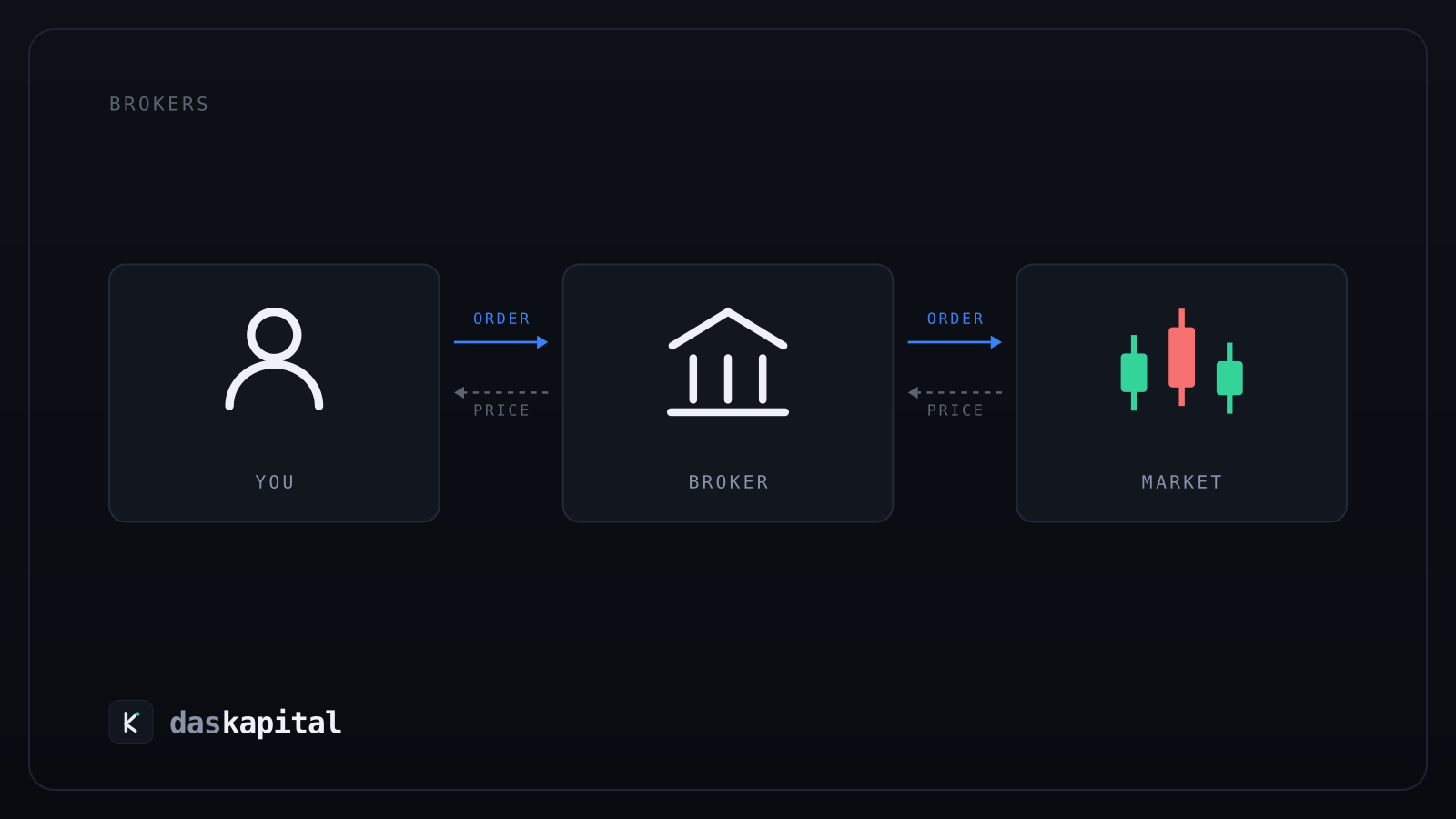
There is no building where currencies are traded and no number you can call to ask for a price. The market is a network of banks, funds and market makers quoting each other, and none of them will open an account for a person with a few thousand dollars. A broker is the thing that stands in between: it gives you an account, quotes you a price, and takes your order somewhere.
That "somewhere" is the whole subject. Two brokers can show you the same instrument at nearly the same price and do completely different things with the order you send.
Three ways your order gets filled
| Model | Who takes the other side | How the broker earns | What to watch |
|---|---|---|---|
| Market maker | The broker itself | The spread, plus the net result of client positions | A structural conflict of interest. It is legal and common; regulation and published execution statistics are what make it acceptable. |
| STP | A liquidity provider the broker routes to | A mark-up added to the provider's spread | How many providers, and whether the best of them is actually reachable at your size. |
| ECN / raw | Other participants in a shared pool | Commission per lot | Spreads can be near zero and then widen hard. The commission is the real, constant cost. |
None of the three is inherently dishonest, and the middle one covers most of the industry. What matters is that you know which you are in, because it decides what the costs look like and what happens to your order when the market moves fast.
What you actually pay
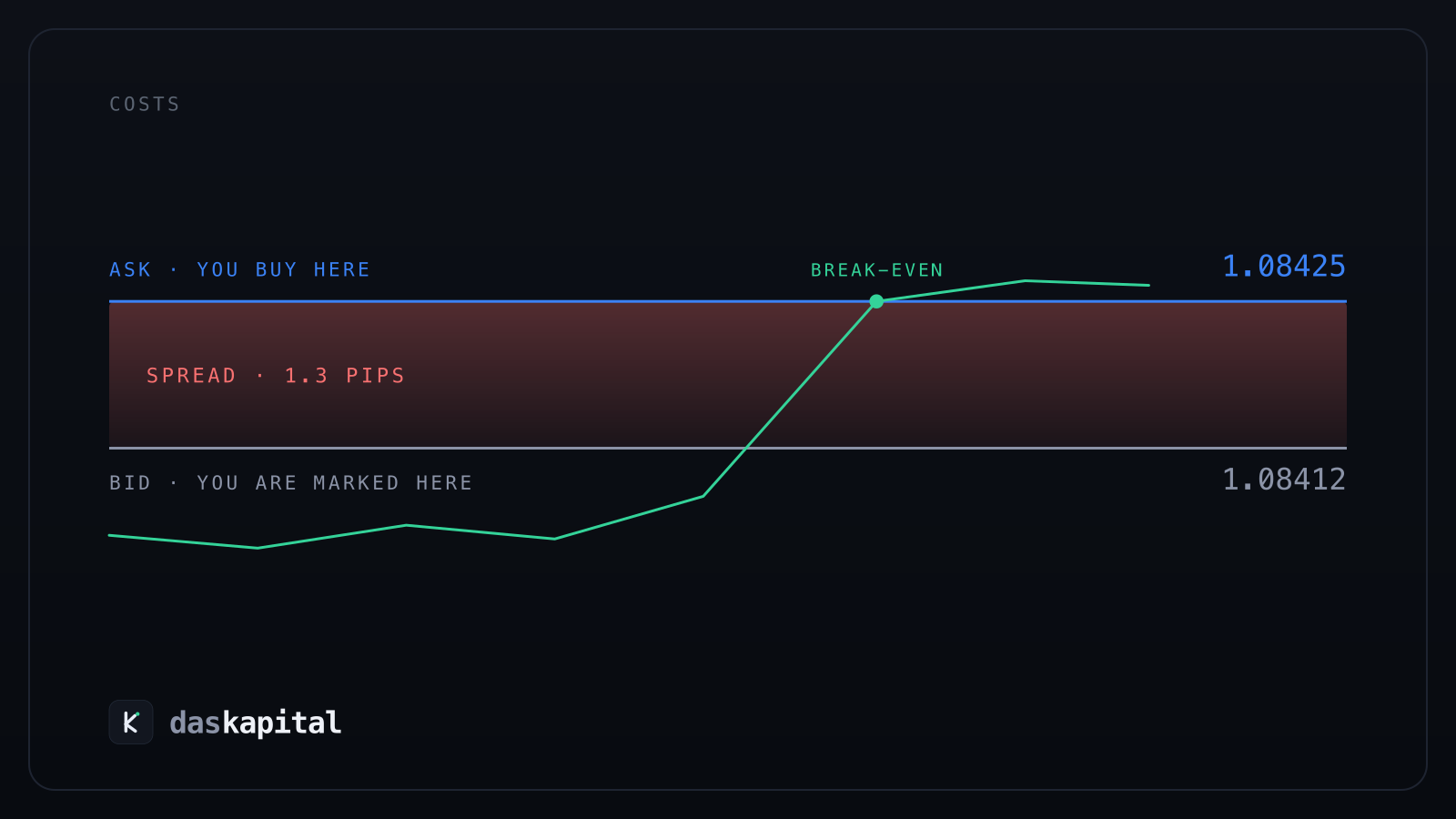
- Spread — the gap between the buy and sell price, paid on every position. Worked through in money in what a spread actually costs you.
- Commission — a per-lot charge on raw-spread accounts, usually quoted per side. Commission-free accounts have not removed it; they have folded it into the spread.
- Swap — overnight financing, credited or debited daily for every position held past the broker's rollover time, and typically charged at triple rate one day a week to cover the weekend.
- Conversion — if the instrument settles in a currency your account is not denominated in, every profit and loss is converted, at the broker's rate.
- Account fees — inactivity charges, withdrawal fees, and in some cases a fee for the platform itself. Small, avoidable, and worth reading before rather than after.
Leverage is not extra money
Leverage decides how much of your balance the broker sets aside while a position is open. It does not change the size of the position, the size of the move, or the amount you make and lose per point. Those are decided entirely by how much you bought.
| Leverage | Margin held for one standard lot of EUR/USD | Value of one pip |
|---|---|---|
| 1:30 | $3,613 | $10 |
| 1:100 | $1,084 | $10 |
| 1:500 | $217 | $10 |
The third column is the point. Higher leverage did not make the trade bigger — it made the same trade cheaper to hold, which means a smaller balance can carry it, which means a move that would have been survivable now empties the account. What high leverage genuinely buys is the ability to be wiped out faster.
When losses eat into the reserved margin the broker issues a margin call, and past a lower threshold it closes positions itself — the stop-out. Neither is a punishment; both are the broker protecting itself from a debt you cannot pay.
Regulation decides what happens when something goes wrong
Everything above is about a normal day. A licence is about the abnormal one — and the questions it answers are the ones nobody asks until they need the answer.
- Segregated client money — your balance held in a separate account from the firm's own, so it is not part of the estate if the firm fails.
- A compensation scheme — a capped payout if the firm fails anyway. Common in the UK and EU, absent in most offshore jurisdictions.
- Negative balance protection — a guarantee that a gap through your stop cannot leave you owing money. Mandatory for retail clients in several jurisdictions, optional in others.
- Leverage caps — usually the clearest sign of which rulebook a firm is under: 1:30 for retail majors in the EU and UK, several hundred to one offshore.
- A complaints route — an ombudsman or regulator who will actually read a complaint, rather than an inbox at the firm you are complaining about.
Many firms operate several licensed entities and will register you with whichever one your country allows. The entity named in your account agreement is the one whose rules you actually have, regardless of the flags on the website.
Before you fund an account
- Which legal entity am I contracting with, and which regulator licenses it?
- Is client money segregated, and is there a compensation scheme?
- Do I get negative balance protection in writing?
- What is the median spread on the instruments I plan to trade — not on EUR/USD?
- What is the commission per lot, per side?
- What is the swap on a position held for a week?
- Which fill model, and are execution statistics published?
- What happens to my open positions if my connection drops?
- How long does a withdrawal take, and what does it cost?
- Can I open a demo account on the same infrastructure first?
The last one is worth insisting on. A demo account that runs on a different price feed from the live one answers a question you did not ask.
A broker is not a counterparty you beat. It is a cost structure you either understand or pay.
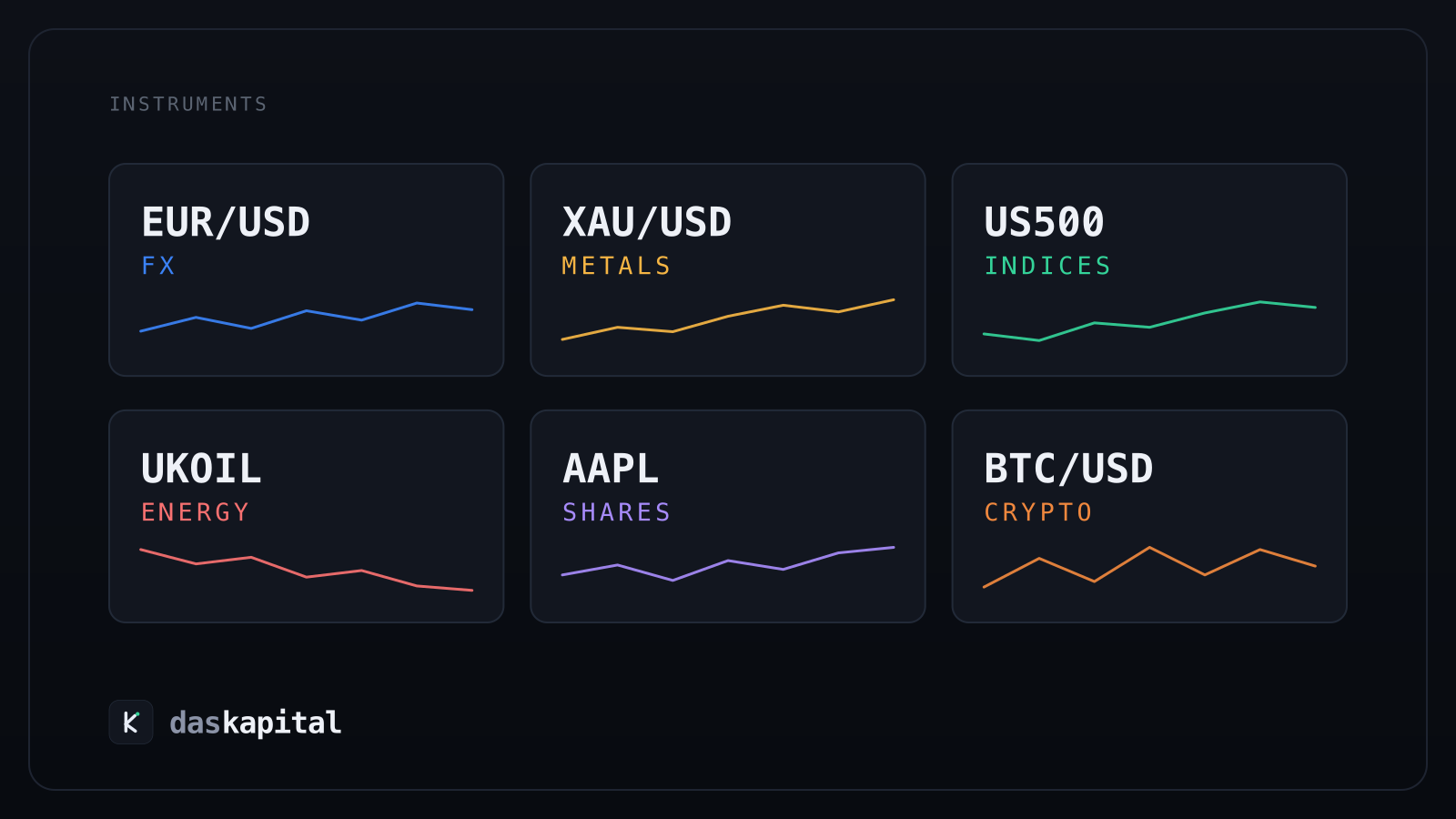
We publish what the brokers we connect to charge on the broker comparison page. What those costs apply to — currencies, metals, indices, energy, shares, crypto — is what there is to trade.